

Be Recognised — The WES Awards 2027
The WES Awards celebrate the individuals and institutions redefining what excellence looks like in education. If you are doing work that matters, this is the stage where it gets the recognition it deserves.
Participation in the World Education Awards is by invitation-only. Only shortlisted nominees will be eligible to submit final entries

Award Categories
Complete Category Framework with Descriptions, Eligibility, Key Qualities & Evaluation Parameters
This award recognises educators who are making a direct, measurable difference in how students learn. It honours teachers, trainers, professors, and instructional designers whose innovative methods, dedication, and mentorship have elevated learning outcomes and inspired those around them. This is not about titles or tenure — it is about impact in the classroom, the lecture hall, or the training environment. If your teaching has changed lives, this is your category.
Who Can Apply: Teachers, trainers, professors, tutors, instructional designers, academic coordinators, and teaching faculty across K-12, higher education, and vocational training institutions worldwide.
Key Qualities:
- Demonstrated innovation in teaching methods and pedagogy
- Proven, measurable impact on student learning outcomes
- Active mentorship of students and fellow educators
- Commitment to continuous professional development
- Meaningful contribution to institutional culture and community
- Adaptability in responding to evolving learner needs
Evaluation Parameters:
| # | Parameter | Description |
|---|---|---|
| 1 | Pedagogical Innovation | Originality and effectiveness of teaching methods, curriculum design, or instructional approaches introduced by the nominee |
| 2 | Measurable Learner Impact | Evidence of improved student outcomes — academic performance, skill acquisition, graduation rates, or career readiness — directly attributable to the nominee's work |
| 3 | Mentorship & Knowledge Sharing | Track record of mentoring students, training fellow educators, or contributing to the professional development of peers within and beyond the institution |
| 4 | Institutional & Community Contribution | Impact on the broader institution, local community, or education ecosystem — through outreach, programme development, or community engagement initiatives |
| 5 | Professional Growth & Thought Leadership | Evidence of ongoing learning — certifications, research, publications, conference participation, or contributions to education discourse |
| 6 | Adaptability & Resilience | Demonstrated ability to adapt teaching practices to changing contexts — technological shifts, diverse learner populations, crisis situations, or resource constraints |
This award celebrates the individuals who are reimagining education through bold ideas, new models, and scalable solutions. It honours EdTech founders, curriculum developers, education researchers, and social entrepreneurs who have created tools, platforms, programmes, or frameworks that measurably improve access, engagement, or learning outcomes. The emphasis is on innovation that works — not prototypes or concepts, but solutions with real adoption, real users, and real results.
Who Can Apply: EdTech founders and co-founders, curriculum developers, education researchers, social entrepreneurs, product leaders, chief technology officers in education companies, innovation heads within educational institutions, and developers of learning platforms or tools.
Key Qualities:
- Creation of a novel solution addressing a genuine education gap
- Evidence of real-world adoption and institutional deployment
- Scalability of the innovation across markets or contexts
- Technology-enabled improvement of access, efficiency, or engagement
- Research-backed design and rigorous impact measurement
- Collaborative approach to development and implementation
Evaluation Parameters:
| # | Parameter | Description |
|---|---|---|
| 1 | Novelty & Originality | Degree to which the innovation represents a genuinely new approach — not an incremental improvement on existing solutions, but a meaningful reimagination of how education is delivered or experienced |
| 2 | Real-World Adoption | Scale of deployment — number of institutions, educators, or learners actively using the solution, with evidence of sustained engagement beyond pilot stage |
| 3 | Measurable Impact on Outcomes | Evidence that the innovation has improved learning outcomes, operational efficiency, or access to education — supported by data, research, or verified case studies |
| 4 | Scalability & Replicability | Potential and demonstrated ability of the innovation to scale across different institutions, regions, education levels, or cultural contexts without significant loss of effectiveness |
| 5 | Technical Robustness | Quality of the underlying technology, design, or methodology — including user experience, reliability, data privacy compliance, and integration capability with existing education systems |
| 6 | Sustainability & Business Viability | Evidence that the innovation is financially and operationally sustainable — through a viable business model, institutional funding, or a credible path to long-term continuity |
This award recognises the leaders who operate at the system level — shaping policy, driving institutional reform, and building coalitions that move education forward. It honours school leaders, government officials, policymakers, deans, and NGO heads whose strategic vision has produced change that extends beyond a single classroom or institution. Whether through education reform legislation, institutional turnaround, multi-stakeholder partnerships, or advocacy that shifted public discourse, this category is for leaders whose decisions have altered the trajectory of education for entire communities, regions, or nations.
Who Can Apply: School principals and heads, university deans and provosts, government education officials, ministry advisors, policy architects, NGO and foundation leaders, education board members, and leaders of multi-institutional education networks or coalitions.
Key Qualities:
- Strategic vision that has driven systemic or institutional change
- Track record of education policy design, reform, or implementation
- Ability to build multi-stakeholder coalitions across sectors
- Commitment to equity, access, and inclusive education policy
- Evidence of capacity building within institutions or systems
- Sustained advocacy that shifted discourse or practice at scale
Evaluation Parameters:
| # | Parameter | Description |
|---|---|---|
| 1 | Strategic Vision & Execution | Clarity and ambition of the nominee's strategic vision for education, paired with evidence that the vision was translated into concrete action and measurable outcomes |
| 2 | Systemic Impact | Scale and depth of change produced — at institutional, regional, national, or international level. Impact that extends beyond a single classroom or programme to affect entire systems or communities |
| 3 | Policy Influence & Reform | Direct contribution to education policy — through legislation, regulatory frameworks, institutional governance changes, or advisory roles that shaped how education is structured or delivered |
| 4 | Coalition Building & Collaboration | Ability to bring together diverse stakeholders — government bodies, institutions, industry, communities, and civil society — to drive collective action toward shared education goals |
| 5 | Equity & Inclusion Advocacy | Commitment to ensuring that leadership and policy efforts explicitly address equity, access, diversity, and inclusion — particularly for marginalised, underserved, or at-risk learner populations |
| 6 | Sustainability & Capacity Building | Evidence that the changes introduced are built to last — through institutional capacity building, succession planning, knowledge transfer, or embedded policy frameworks that outlive the nominee's tenure |
This award honours the designers and builders — the individuals who are engineering education systems that produce graduates ready to thrive in a rapidly changing global economy. It recognises curriculum architects, programme directors, academic leaders, and institutional strategists who have embedded future-ready skills, industry integration, experiential learning, and employability outcomes into the DNA of their institutions. This is not about adding a career services office. It is about fundamentally rethinking what an education institution produces — and building the structure to deliver it.
Who Can Apply: Curriculum designers and architects, programme directors, academic deans, heads of learning and development, industry-partnership leads within education institutions, workforce development directors, institutional strategists, and leaders of skills-based or competency-based education initiatives.
Key Qualities:
- Redesign of curriculum or programmes around employability and future skills
- Deep integration of industry partnerships into academic delivery
- Implementation of experiential, project-based, or work-integrated learning
- Measurable improvement in graduate employability or career outcomes
- Forward-looking approach to skills that will matter in the next decade
- Institutional transformation toward outcome-driven education models
Evaluation Parameters:
| # | Parameter | Description |
|---|---|---|
| 1 | Curriculum Innovation for Employability | Evidence of fundamental curriculum redesign — embedding future-ready skills (critical thinking, digital literacy, AI fluency, entrepreneurship, cross-cultural competence) into core academic programmes rather than as elective add-ons |
| 2 | Industry & Employer Integration | Depth and quality of industry partnerships — co-designed programmes, employer-led projects, internship pipelines, advisory boards, or corporate-academic collaborations that directly inform what and how students learn |
| 3 | Graduate Outcomes | Measurable data on graduate employability — placement rates, time-to-employment, employer satisfaction scores, salary benchmarks, or entrepreneurship rates — demonstrating that the nominee's work produced career-ready graduates |
| 4 | Experiential & Applied Learning | Implementation of project-based learning, work-integrated education, simulations, capstone projects, or real-world problem-solving experiences as core components of the academic programme |
| 5 | Scalability & Institutional Adoption | Evidence that the nominee's approach has been adopted beyond a single course or department — influencing institutional strategy, being replicated across programmes, or serving as a model for other institutions |
| 6 | Future-Readiness & Adaptability | Demonstrated ability to anticipate emerging skills demands and continuously evolve the curriculum — incorporating new technologies, responding to labour market shifts, and preparing students for roles that may not yet exist |
This award celebrates the individuals who are making education boundary-free — dismantling the geographic, economic, technological, and social barriers that prevent learners from accessing quality education. It honours leaders driving cross-border university collaborations, international branch campus development, dual-degree programmes, virtual exchange platforms, refugee education initiatives, open educational resources, and any effort that extends the reach of education beyond its traditional boundaries. The word "borderless" is intentionally broad: it covers those breaking physical borders through internationalisation and those breaking invisible barriers through access and equity. If your work means a learner somewhere in the world can now access an education they previously could not, this is your category.
Who Can Apply: Directors of international partnerships and internationalisation, leaders of cross-border education programmes, founders of virtual exchange or online learning platforms, architects of dual-degree or transnational education agreements, refugee and displaced-learner education leaders, open educational resource (OER) pioneers, and leaders of initiatives that expand access to underserved populations across borders.
Key Qualities:
- Track record of breaking geographic or socioeconomic barriers to education
- Design and execution of cross-border academic partnerships or programmes
- Expansion of access for learners who were previously excluded
- Use of technology to enable education delivery across boundaries
- Cultural sensitivity and adaptability in diverse international contexts
- Commitment to equity in global education access
Evaluation Parameters:
| # | Parameter | Description |
|---|---|---|
| 1 | Reach & Access Expansion | Measurable increase in learner access — number of students reached across borders, communities served, or barriers eliminated. Evidence that learners who previously could not access quality education now can because of the nominee's work |
| 2 | Cross-Border Partnership Quality | Depth and sustainability of international collaborations — joint programmes, institutional agreements, dual degrees, branch campuses, or virtual exchange partnerships. Quality of partnership design, not just quantity of MOUs signed |
| 3 | Innovation in Delivery | Creative use of technology, platforms, or programme models to deliver education across boundaries — virtual exchange, blended cross-border learning, mobile-first platforms, or novel partnership structures that overcome logistical, regulatory, or financial barriers |
| 4 | Equity & Inclusion Impact | Evidence that the nominee's work explicitly addresses equity — reaching marginalised, refugee, displaced, low-income, or first-generation learners, not just facilitating exchanges among already-privileged student populations |
| 5 | Cultural Adaptability & Sensitivity | Demonstrated ability to design and deliver programmes that respect and adapt to diverse cultural, linguistic, and regulatory contexts — not a one-size-fits-all export of a single educational model |
| 6 | Sustainability & Institutional Embedding | Evidence that the cross-border or access initiatives are institutionally embedded and financially sustainable — not dependent on a single grant cycle or individual champion, but built into the DNA of participating institutions |
From blackboards to algorithms — this award honours the educators, academic leaders, and institutional innovators who are leading the journey from traditional teaching to AI-powered education. It recognises individuals who are not just adopting AI tools, but fundamentally transforming how their classrooms, departments, or institutions teach, assess, and support learners through artificial intelligence. This is not about building AI products — it is about bridging the distance between chalk-era pedagogy and AI-era practice. The nominee might be a professor who redesigned an entire department's learning model around AI-assisted personalisation, a school principal who transitioned their institution from conventional assessment to AI-driven adaptive evaluation, or an academic leader who built an ethical framework for AI adoption that became a model for others. What matters is that the journey from chalk to AI produced measurably better outcomes for students.
Who Can Apply: Educators integrating AI into classroom practice, academic leaders driving institutional AI adoption, school principals implementing AI-powered learning systems, instructional designers building AI-augmented curricula, heads of academic technology or digital transformation, researchers studying AI in education with applied institutional impact, and leaders who have developed AI governance or ethics frameworks for educational settings.
Key Qualities:
- Successful integration of AI tools into teaching, learning, or assessment at institutional scale
- Measurable improvement in student outcomes through AI-augmented education
- Responsible and ethical approach to AI deployment — including data privacy, bias awareness, and transparency
- Evidence of educator empowerment, not replacement, through AI
- Development of replicable models or frameworks for AI adoption in education
- Commitment to building AI literacy among students and faculty
Evaluation Parameters:
| # | Parameter | Description |
|---|---|---|
| 1 | Depth of AI Integration | Extent to which AI has been embedded into core teaching, learning, or assessment processes — not as a peripheral experiment, but as a sustained, institutional-level practice that has changed how education is delivered |
| 2 | Measurable Impact on Learning | Evidence that AI integration has produced improved student outcomes — better learning performance, increased engagement, personalised learning pathways, faster feedback loops, or enhanced accessibility — supported by data |
| 3 | Responsible & Ethical AI Practice | Demonstrated commitment to responsible AI use — including student data privacy, algorithmic transparency, bias mitigation, academic integrity frameworks, and clear governance policies for AI deployment in education |
| 4 | Educator Empowerment | Evidence that AI has augmented rather than replaced the educator's role — freeing time for high-value interactions, enhancing pedagogical decision-making, or enabling differentiated instruction that would be impossible without AI support |
| 5 | Replicability & Knowledge Sharing | Whether the nominee's approach has been documented, shared, or adopted by other educators or institutions — through published frameworks, training programmes, open resources, or peer mentorship that extends the impact beyond the nominee's own practice |
| 6 | AI Literacy Development | Contribution to building AI literacy among students, faculty, or the broader education community — through curriculum, training, awareness programmes, or institutional initiatives that prepare stakeholders to engage with AI critically and effectively |
This award recognises schools and school groups that are setting the benchmark for K-12 education globally. It honours institutions delivering outstanding performance across academic outcomes, holistic student development, teacher quality and retention, technology integration, campus infrastructure, parent and community engagement, and institutional governance. This is not a single-metric award — it recognises schools that are excellent across the board. Whether you are a single school in an emerging market doing extraordinary things with limited resources or a global school network operating across multiple countries, the evaluation is the same: are your students thriving, are your teachers empowered, and is your institution built to sustain excellence over time?
Who Can Apply: K-12 schools (public, private, charter, or international), school groups and networks, early childhood through secondary education institutions, vocational secondary schools, and school systems operated by government bodies, foundations, or private organisations. The institution itself is the nominee — represented by its principal, head of school, or institutional leadership team.
Key Qualities:
- Consistently strong academic outcomes and holistic student development
- High-quality teaching faculty with evidence of professional development and retention
- Effective integration of technology into teaching and institutional operations
- Strong governance, leadership, and strategic planning
- Active parent, alumni, and community engagement
- Commitment to inclusivity, wellbeing, and sustainable institutional practices
Evaluation Parameters:
| # | Parameter | Description |
|---|---|---|
| 1 | Academic Excellence & Student Outcomes | Evidence of consistently strong academic performance — examination results, learning assessments, student progression rates, and co-curricular achievement. Quality of outcomes relative to the institution's context and resources |
| 2 | Holistic Student Development | Programmes and outcomes beyond academics — social-emotional learning, physical health, character development, student leadership, creativity, and life-skills education. Evidence that the school develops the whole child, not just test scores |
| 3 | Teacher Quality & Development | Investment in faculty — hiring standards, ongoing professional development, teacher retention rates, mentorship programmes, and the overall culture of teaching excellence within the institution |
| 4 | Technology Integration & Innovation | Effective use of technology to enhance teaching, learning, assessment, and institutional operations — not technology for its own sake, but purposeful integration that improves outcomes and efficiency |
| 5 | Governance & Institutional Leadership | Quality of institutional governance — strategic planning, financial management, leadership development, regulatory compliance, and decision-making frameworks that sustain excellence over time |
| 6 | Community Engagement & Social Impact | Strength of the institution's relationship with parents, alumni, local community, and the broader education ecosystem — through outreach, partnerships, transparency, and contribution to community development |
This award recognises universities, colleges, and higher education institutions that are delivering exceptional value to their students, their industries, and their communities. It honours institutions demonstrating outstanding performance in teaching quality, research output, graduate employability, internationalisation, governance, innovation, and societal impact. The evaluation considers the institution as a whole — not a single department or programme. Nominees should provide evidence of sustained performance across multiple dimensions: student outcomes data, research contributions, industry partnerships, global rankings trajectory, and the institutional culture that makes excellence repeatable rather than accidental.
Who Can Apply: Universities (public and private), colleges, polytechnics, higher education institutes, professional education institutions, and multi-campus university systems. The institution itself is the nominee — represented by its vice chancellor, president, provost, or institutional leadership team.
Key Qualities:
- Sustained excellence in teaching quality and pedagogical innovation
- Significant research output, publications, and knowledge contribution
- Strong graduate employability and industry-relevant programme design
- Active internationalisation — global partnerships, exchange programmes, and diverse student body
- Robust institutional governance, financial health, and strategic leadership
- Meaningful societal impact through community engagement, industry collaboration, and public service
Evaluation Parameters:
| # | Parameter | Description |
|---|---|---|
| 1 | Teaching Quality & Pedagogical Innovation | Evidence of high-quality teaching — student satisfaction data, pedagogical innovation, faculty qualifications, curriculum relevance, and learning outcomes that demonstrate the institution's commitment to academic excellence |
| 2 | Research Output & Knowledge Contribution | Volume and quality of research — publications, citations, patents, funded projects, and contributions to advancing knowledge in the institution's areas of strength. Impact of research beyond academia |
| 3 | Graduate Employability & Industry Relevance | Measurable graduate outcomes — employment rates, employer satisfaction, alumni career progression, industry partnership depth, and the alignment of academic programmes with workforce demands |
| 4 | Internationalisation & Global Engagement | Breadth and quality of international activity — student and faculty exchange, global partnerships, transnational education programmes, international research collaborations, and diversity of the campus community |
| 5 | Governance, Leadership & Financial Health | Quality of institutional leadership and governance — strategic vision, financial sustainability, accreditation status, regulatory compliance, and the governance structures that enable long-term institutional health |
| 6 | Societal Impact & Community Contribution | The institution's contribution beyond its own walls — community engagement, public service, social innovation, local economic impact, and programmes that address societal challenges through education and research |
This award recognises the EdTech product, platform, or solution that is setting a new standard in education technology. Unlike the Innovation in Education Award — which honours the individual innovator — this category honours the organisation and the product itself. It is for the learning management system that transformed how institutions operate, the assessment platform that redefined how students are evaluated, the campus management solution that streamlined operations for hundreds of schools, or the AI-powered tutoring engine that improved outcomes at scale. The bar is commercial traction and institutional impact — this is not a startup pitch competition. Nominees must demonstrate that their product is deployed, adopted, and producing measurable results in real educational settings.
Who Can Apply: EdTech companies, technology startups serving the education sector, learning management system providers, assessment and evaluation platform companies, campus management and ERP solution providers, AI-powered learning platforms, student engagement and retention tools, virtual and augmented reality education companies, and any technology organisation whose primary product serves the education market. The organisation is the nominee, represented by its CEO, founder, CTO, or product leader.
Key Qualities:
- A clearly defined product or platform solving a genuine education challenge
- Demonstrated institutional adoption across multiple education clients
- Evidence of measurable impact on learning outcomes, operational efficiency, or access
- Technical excellence in design, user experience, and reliability
- Scalability across different education levels, markets, or geographies
- A sustainable business model that ensures long-term product continuity and support
Evaluation Parameters:
| # | Parameter | Description |
|---|---|---|
| 1 | Product Impact & Outcomes | Evidence that the product has measurably improved learning outcomes, institutional efficiency, student engagement, or access to education — supported by data from deployed institutions, not projections or pilot results |
| 2 | Institutional Adoption & Market Traction | Scale of real-world deployment — number of institutions, educators, or learners actively using the product, geographic spread, and evidence of sustained usage beyond initial onboarding. Retention and renewal rates matter more than new sign-ups |
| 3 | Innovation & Differentiation | Degree to which the product represents a genuinely new approach in its category — proprietary technology, unique methodology, or a novel application of existing technology that sets it apart from competitors in the EdTech market |
| 4 | User Experience & Technical Excellence | Quality of product design — intuitive interface, reliability, performance, integration capability with existing institutional systems (LMS, SIS, ERP), data security, privacy compliance, and accessibility for diverse user populations |
| 5 | Scalability & Adaptability | Demonstrated ability to scale across different education levels (K-12, higher ed, vocational), geographic markets, and institutional contexts without significant loss of effectiveness or user experience quality |
| 6 | Business Sustainability & Client Support | Evidence of a viable business model, strong client support infrastructure, product roadmap, and organisational stability that gives institutions confidence in the product's long-term continuity. Customer satisfaction and support responsiveness |
Behind every dropout statistic is a student who wasn't okay. Behind every teacher attrition number is an educator who burned out. This award honours the individuals who refused to accept that as inevitable — the school counsellors, university wellbeing directors, student support leaders, and educators who built or led programmes that measurably improved mental health, emotional resilience, and psychological safety within their institutions. This is education's most under-recognised leadership challenge. Academic outcomes depend on wellbeing outcomes, and this category puts a global spotlight on the people who understand that — and act on it. Whether you reduced student anxiety rates across a school, built a peer-support network that changed campus culture, or created an educator wellness programme that cut teacher burnout in half, this is your category.
Who Can Apply: School counsellors, university wellbeing directors, student affairs leaders, heads of pastoral care, educator wellness programme designers, SEL (social-emotional learning) curriculum leaders, campus psychologists, and any education professional whose primary contribution is improving the mental health and emotional wellbeing of students or fellow educators.
Key Qualities:
- Design and leadership of structured wellbeing programmes with measurable outcomes
- Direct, positive impact on student mental health, emotional resilience, or educator wellness
- Creation of psychologically safe institutional cultures
- Innovation in wellbeing delivery — peer support models, digital tools, culturally adapted approaches
- Advocacy for wellbeing as a strategic priority, not an afterthought
- Knowledge sharing and capacity building beyond the nominee's own institution
Evaluation Parameters:
| # | Parameter | Description |
|---|---|---|
| 1 | Measurable Wellbeing Outcomes | Evidence of improved mental health or emotional wellbeing — reduced anxiety or depression rates, improved student satisfaction scores, lower dropout or absenteeism linked to mental health, reduced educator burnout or attrition, or increased help-seeking behaviour. Data and assessment results carry more weight than anecdotal reports |
| 2 | Programme Design & Comprehensiveness | Quality of the wellbeing programme or intervention — structured framework, evidence-based methods, range of services (prevention, early identification, intervention, referral pathways, ongoing support), and integration into institutional operations rather than a standalone initiative |
| 3 | Reach & Inclusivity | Number of students or educators served, and evidence that the programme reaches diverse populations — including at-risk students, first-generation learners, international students, students with disabilities, and marginalised groups who are often least likely to access wellbeing support |
| 4 | Innovation in Approach | Creative or pioneering methods — peer counselling models, digital mental health tools, culturally adapted interventions, gamified SEL programmes, teacher-led wellbeing circles, or novel approaches to stigma reduction that go beyond conventional counselling services |
| 5 | Institutional Culture Change | Evidence that the nominee's work shifted institutional culture — leadership buy-in, policy changes, integration of wellbeing into strategic planning, or visible changes in how students and staff talk about and engage with mental health at the institution |
| 6 | Knowledge Sharing & Replicability | Whether the nominee's approach has been documented, published, presented at conferences, or adopted by other institutions — evidence that the impact extends beyond the nominee's own setting and contributes to the broader field of student and educator wellbeing |
This award recognises schools, universities, and education organisations that have moved wellness from a poster on the wall to a pillar of their institutional strategy. It honours institutions with outstanding, sustained mental health and wellbeing programmes — structured SEL curricula, campus counselling infrastructure, anti-bullying frameworks, educator wellness initiatives, or student mental health support systems — that are producing measurable outcomes at scale. The bar is high: this is not an award for hosting a wellness week or hiring a single counsellor. It recognises institutions that have made a strategic, funded, embedded commitment to the psychological health of their students and staff — and can prove it's working.
Who Can Apply: K-12 schools and school groups with structured wellbeing programmes, universities and colleges with comprehensive student mental health services, education networks or multi-school systems with system-wide wellness initiatives, corporate training organisations with educator wellness programmes, and NGOs or foundations running mental health programmes in educational settings. The institution or organisation is the nominee, represented by its head of school, wellbeing director, or institutional leadership.
Key Qualities:
- A structured, institution-wide wellbeing programme with clear objectives and measurable outcomes
- Evidence of sustained investment — budget allocation, dedicated staff, leadership commitment
- Comprehensive services covering prevention, early identification, intervention, and ongoing support
- Measurable improvements in student or educator mental health metrics
- Inclusive design that reaches all populations within the institution
- Integration of wellbeing into institutional strategy, not a standalone department
Evaluation Parameters:
| # | Parameter | Description |
|---|---|---|
| 1 | Programme Impact & Outcomes | Evidence that the programme has produced measurable improvements — reduced student mental health incidents, lower anxiety or depression prevalence, improved help-seeking rates, reduced educator burnout, decreased absenteeism, or improved institutional wellbeing survey scores. Longitudinal data (trends over 2+ years) is valued over single-point measurements |
| 2 | Programme Scope & Comprehensiveness | Breadth and depth of the wellbeing offering — does it cover prevention (awareness, resilience building), early identification (screening, referral pathways), intervention (counselling, crisis support), and ongoing care (follow-up, reintegration)? A comprehensive programme addresses the full spectrum, not just reactive crisis management |
| 3 | Institutional Commitment & Sustainability | Evidence of sustained, strategic investment — dedicated budget, qualified staff, leadership endorsement, integration into the institution's strategic plan, and governance structures that ensure the programme continues regardless of individual personnel changes |
| 4 | Accessibility & Inclusivity | Evidence that the programme reaches all populations within the institution — including students from diverse cultural backgrounds, international students, students with disabilities, LGBTQ+ students, first-generation learners, and staff at all levels. Participation data disaggregated by population strengthens the nomination |
| 5 | Innovation & Best Practice | Creative or pioneering elements in the programme — digital mental health tools, peer-support networks, culturally adapted approaches, integration of wellbeing into academic curriculum, teacher training for mental health first aid, or partnerships with external mental health providers that extend the institution's capacity |
| 6 | External Recognition & Replicability | Whether the programme has been recognised by external bodies (accreditors, government, media, research institutions), documented as a case study, or adopted as a model by other institutions — evidence that the programme's impact extends beyond the nominee's own walls |
The intersection of education technology and mental wellness is one of the most important — and most underdeveloped — spaces in the sector. This award recognises the innovators who are building technology solutions that address the mental health and emotional wellbeing of students and educators — AI-powered wellbeing screening tools that identify at-risk students before they fall through the cracks, digital counselling platforms that make support accessible beyond office hours, gamified social-emotional learning apps that build resilience in younger learners, educator burnout detection and support systems, and any technology that is measurably improving mental wellness outcomes in educational settings. This is not about meditation apps repackaged for schools. This is about technology that fills a genuine gap in the wellbeing infrastructure of education — and has the clinical or pedagogical evidence to prove it.
Who Can Apply: Founders and leaders of EdTech companies building mental wellness tools for education, developers of digital counselling or teletherapy platforms serving students or educators, creators of SEL technology and gamified resilience-building platforms, AI and data scientists building student wellbeing screening or predictive tools, researchers who developed and deployed technology-enabled mental health interventions in education settings, and any individual or organisation whose primary innovation uses technology to improve mental wellness in education.
Key Qualities:
- A clearly defined technology solution addressing a genuine mental wellness gap in education
- Evidence of effectiveness — clinical validation, pedagogical evidence, user outcome data, or institutional case studies
- Real-world deployment in educational settings with measurable adoption
- Responsible design — data privacy, age-appropriate content, crisis safeguards, and ethical use of sensitive wellbeing data
- Scalability across different school systems, age groups, or cultural contexts
- Contribution to making mental wellness support more accessible and less stigmatised for students and educators
Evaluation Parameters:
| # | Parameter | Description |
|---|---|---|
| 1 | Effectiveness & Evidence Base | Evidence that the technology improves mental wellness outcomes — validated wellbeing assessments, clinical or pedagogical research, student-reported outcome measures, reduction in referral-to-intervention time, or institutional case studies showing measurable improvement. The jury weights innovations backed by rigorous evidence over downloads and engagement metrics |
| 2 | Adoption & Real-World Deployment | Scale of deployment in educational settings — number of schools or universities using the solution, number of active student or educator users, geographic spread, and evidence of sustained usage beyond initial pilot or trial. Retention and engagement depth matter more than sign-up numbers |
| 3 | Innovation & Differentiation | Degree to which the solution represents a genuinely new approach to mental wellness in education — proprietary technology, novel application of AI or data science, unique therapeutic or pedagogical methodology, or a first-of-its-kind tool that addresses a gap no existing product covers |
| 4 | Safety, Privacy & Ethical Design | Mental wellness data involving students is among the most sensitive data in any sector. Evidence of robust safety practices — age-appropriate design, crisis escalation pathways, parental consent frameworks, data encryption, compliance with education data regulations (FERPA, GDPR, local equivalents), and ethical governance of how wellbeing data is used, stored, and shared |
| 5 | User Experience & Accessibility | Quality of design for the target users — intuitive interface appropriate for the age group, accessibility for users with disabilities, multi-language support, low-bandwidth or offline capability for resource-constrained settings, and sensitivity to the emotional vulnerability of users engaging with mental health content |
| 6 | Scalability & Sustainability | Ability to scale across different education systems, age groups, cultural contexts, and institutional types without loss of quality or clinical safety. Evidence of a viable business or funding model that ensures long-term availability and ongoing development of the solution |

How It Works
Nominate
Submit a nomination form with a brief description of the achievement and supporting evidence.
Review
An independent panel reviews all nominations against published criteria.
Public Voting
Shortlisted nominees enter a public voting phase where peers and professional networks can cast votes of support.
Recognition
Winners are announced and honoured at the WES Awards Gala during the summit.
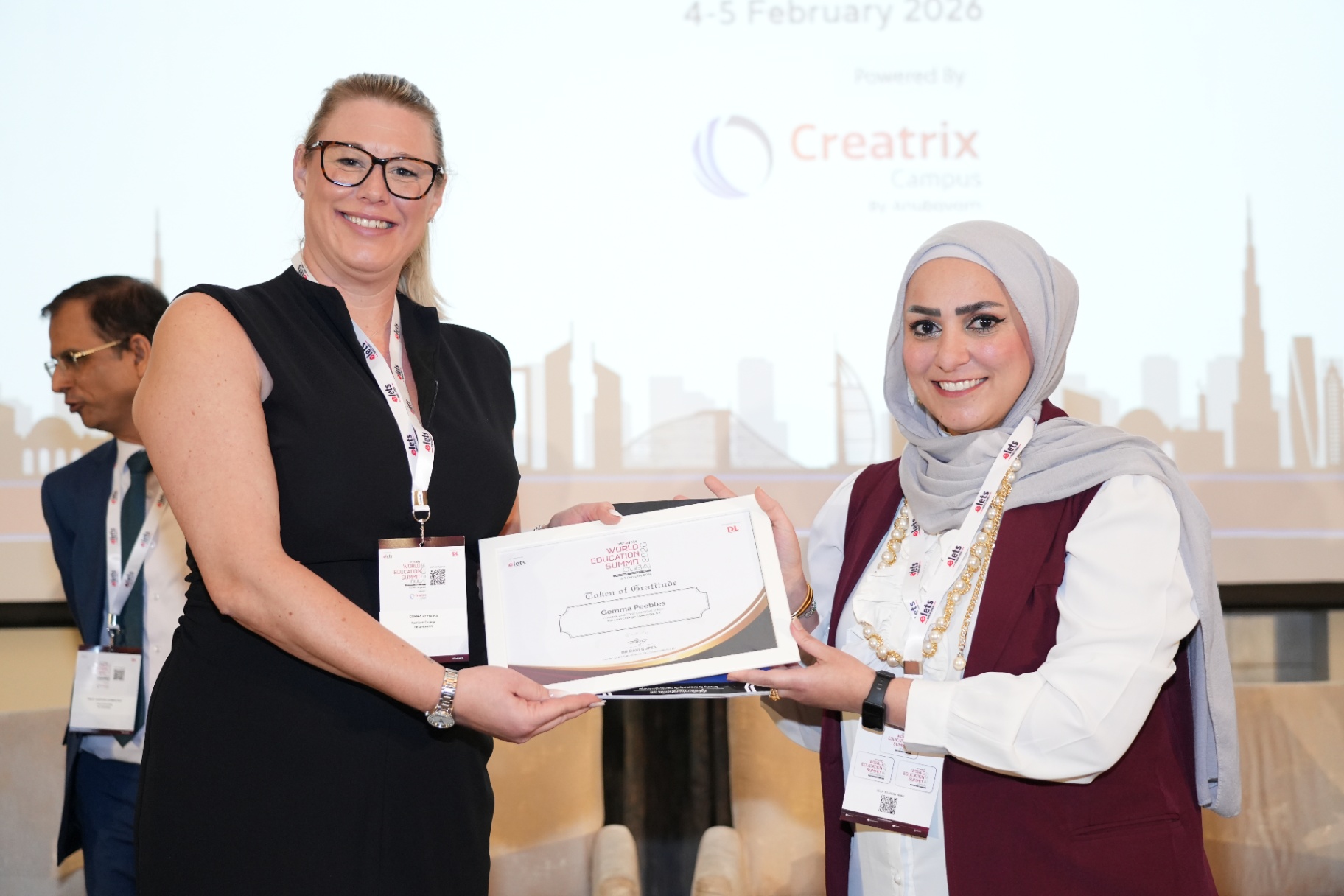
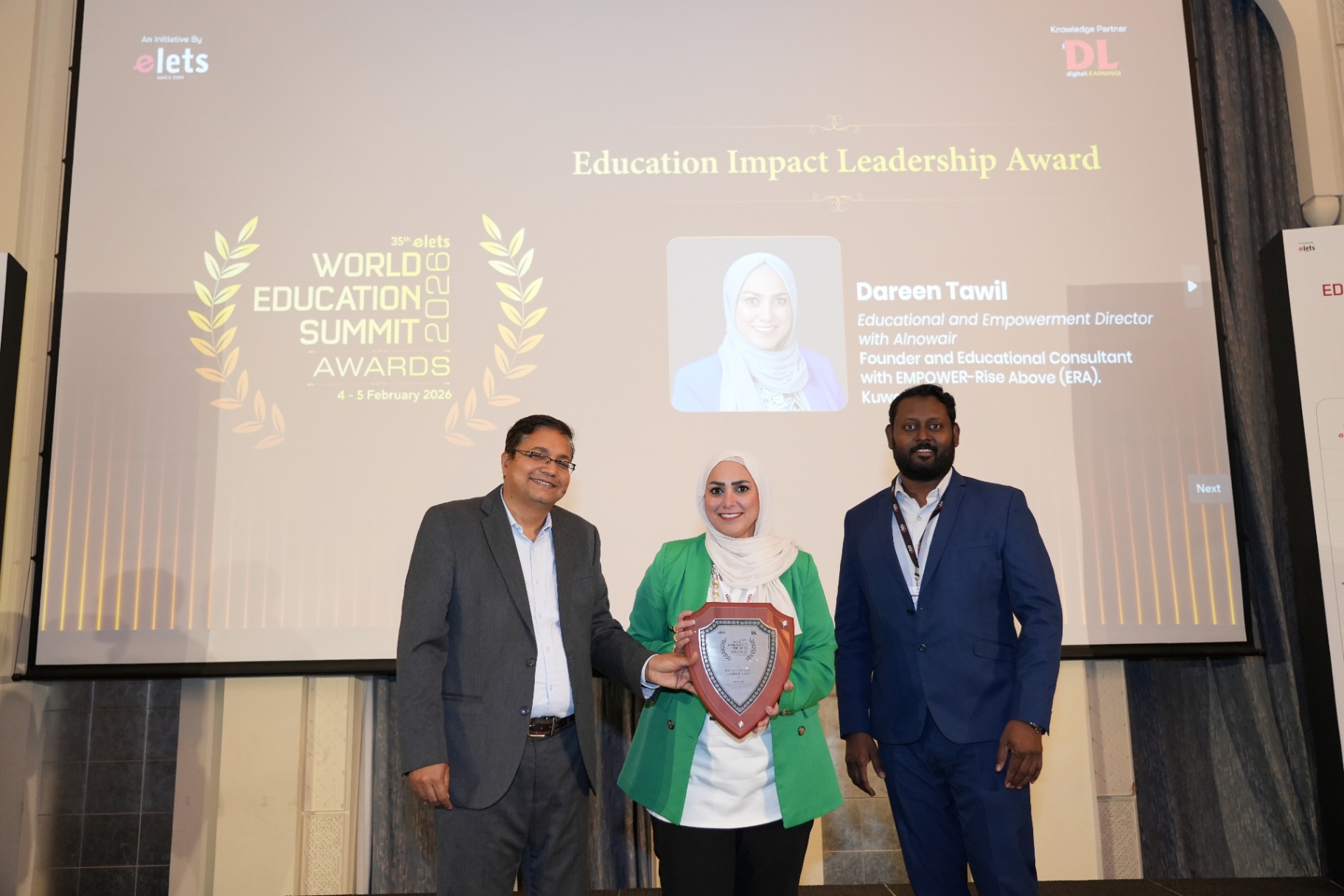
Glimpses of Past Award Ceremonies

















Step Into the Spotlight — Check Your Eligibility
Join the ranks of global education changemakers. Submit your info and our team will help you find your perfect award fit.
FAQs
The World Education Awards are a prestigious recognition of excellence in global education, presented as part of the 37th Elets World Education Summit 2027 in Dubai. The awards celebrate impactful educators, innovators, policymakers, institutions, and changemakers shaping the future of learning.
Nominees can be:
- Individual educators, leaders, EdTech innovators, policy advocates, researchers
- Educational institutions (K–12 schools, universities, vocational institutes)
- NGOs, government education departments, startups, or training providers
Anyone can nominate themselves or others, provided they meet the criteria specified under each award category.
There are 12 categories, including:
- Education Impact Leadership Award (Individual)
- Innovation in Education Award (Individual)
- Leadership & Advocacy Award (Individual)
- World-Ready Architect Award (Individual)
- Borderless Education Award (Individual)
- Chalk to AI Award (Individual)
- K-12 School Excellence Award (Institutional)
- Higher Education Excellence Award (Institutional)
- Trailblazing EdTech Solution Award (Organisation)
- Excellence in Student & Educator Wellbeing Award (Individual)
- Wellness Programme Excellence Award (Institutional or Organisation)
- Breakthrough in EdTech for Mental Wellness Award (Individual or Organisation)
Each category focusses on a unique aspect of education — from pedagogy and innovation to policy, leadership, wellbeing, and impact.
There will be 100 awardees across different categories, selected through a rigorous evaluation process by an esteemed jury of education experts and global advisors.
Yes, there is a nomination and processing fee. The fee varies depending on the category and will be communicated during the nomination submission process. It supports the evaluation process, jury coordination, digital and physical event logistics.
Nominations for the World Education Awards 2027 will close by 30 November 2026. Early submissions are encouraged to ensure thorough evaluation.
Nominations must be submitted through the official Elets World Education Awards portal. Each category has a tailored nomination form with a mix of open-ended and multiple-choice questions, along with document upload options for supporting materials.
NomEach award has clearly defined evaluation parameters, such as:
- Innovation & Creativity
- Measurable Impact
- Leadership & Mentorship
- Scalability & Sustainability
- Equity & Community Engagement
A detailed breakdown is included in each category description.
Yes, as long as the nominee meets the eligibility and evaluation criteria for each category. Separate forms must be filled out for each nomination.
After submission:
- Your nomination is reviewed for completeness.
- Eligible entries undergo evaluation by the jury.
- Shortlisted candidates are notified and promoted across Elets platforms.
- Final winners will be announced and honored during the award ceremony in Dubai.
The awards will be presented at the 37th Elets World Education Summit 2027 in Dubai. Winners will be invited to attend and receive their honours onstage before an international audience. Our team will confirm the venue soon!
Absolutely! The summit is open to all education professionals, institutions, startups, researchers, policymakers and innovators.
Please reach out to our Awards Coordination Team at:
📧 nominations@eletsonline.com
🌐 Visit: www.educationsummit.com
Contact Us
General Inquiries
info@educationsummit.comSponsorship & Partnerships
globalpartners@eletsonline.comSpeaking Opportunities
speakers@eletsonline.comMedia & Press
globalpartners@eletsonline.com
© Copyright 2026 All Rights Reserved by Elets technomedia.